Naltrexone Implant for alcoholism
- -Safe and modern solution for alcohol issues
- -Efficiently blocks alcohol cravings
- -Above 90% success rate in our practice since 2001st
What do we know about Naltrexone implant's effect on alcohol dependence (Naltrexone implant for alcoholism)?
A naltrexone implant helps reduce the risk of alcohol relapse by blocking opioid receptors in the brain, reducing the rewarding effects of drinking, such as euphoria, stimulation, and the urge to continue drinking. Without the expected "buzz" or pleasurable reinforcement, many people find that alcohol becomes less appealing, helping to reduce cravings and support long-term recovery. When combined with appropriate medical care and psychological support, a naltrexone implant can be a safe and effective treatment option for alcohol dependence.
Call for more information 02032898289.
Some of our patients have previously used Naltrexone tablets but prefer the implant, as it provides a more reliable pharmacological solution. While Naltrexone tablets can be effective, there is always the risk of skipping a dose, forgetting to take them, or simply growing tired of daily medication. With the implant, these concerns are eliminated. The Naltrexone implant for alcoholism also helps relieve the inner conflict, uncertainty, and anxiety often caused by alcohol cravings.
A UK patient about his second alcohol chip
Patient review of the effectiveness of the second Naltrexone implant in treating alcoholism

Naltrexone for alcohol dependence treatment.
A UK patient’s experience with her third alcohol implant at our clinic
A patient from Manchester on his second Naltrexone implant for alcoholism
What is an "alcohol chip"?
An "alcohol chip" is an informal term sometimes used to describe long-acting treatments that help support recovery from alcohol dependence. In the UK, people searching for an "alcohol chip" are usually referring to a disulfiram (Esperal®) implant or a Naltrexone implant as a type of sustained-release therapy. Although "alcohol chip" is not an official medical term, it is commonly used by patients when researching treatment options online.
Safety first
Using Naltrexone alongside alcohol poses no risk to your health.
Some older treatments for alcoholism involve creating an aversion to alcohol, such as Disulfiram (Antabuse) or certain herbal remedies.
When ethanol reacts with disulfiram, it can produce toxic effects.
Consuming alcohol while taking disulfiram may cause a range of symptoms including:
flushing, throbbing in the head and neck, severe headaches, breathing difficulties, nausea, vomiting, sweating, increased thirst, chest pain, palpitations, shortness of breath, rapid breathing, rapid heartbeat, low blood pressure, dizziness, weakness, vertigo, blurred vision, and confusion. In severe cases, this reaction can progress to respiratory depression, cardiovascular collapse, irregular heart rhythms, heart attacks, acute heart failure, loss of consciousness, seizures, and even death.
For these reasons, we do not recommend Disulfiram, but instead advocate for the safe use of Naltrexone treatment.
Indications for Naltrexone implant in the treatment of alcoholism
Indications for Naltrexone implant maintenance of sobriety
- -Primarily for alcohol abuse and dependence
- -Combined cocaine and alcohol abuse
- -Chronic alcoholism requiring ongoing management
- -Chronic medical conditions aggravated by alcohol consumption
- -Situations with professional or occupational restrictions on alcohol use
Contraindications
- -Current use of opiates or opioids
- -Acute hepatitis or severe liver impairment
- -Known allergic reaction to Naltrexone
What does an antialcohol implant look like?
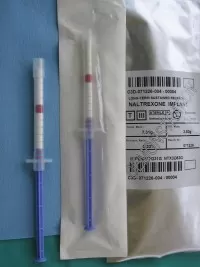
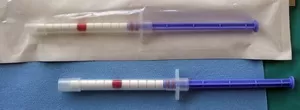
Naltrexone pellets used in the six-month implant are beige-coloured cylinders made from specially prepared and compressed sterile powder. Each pellet measures approximately 6 mm in diameter and 45 mm in length, containing 2,500 mg of Naltrexone. They are loaded into an obliquely cut syringe and hermetically sealed within a medical-grade plastic patch. Additionally, the pellets are sterilised using gamma radiation, indicated by a red circle on the patch.
How is the Naltrexone implant for alcoholism inserted?
- The patient may eat and drink as usual; however, alcohol and foods containing poppy seeds must be avoided for at least three days prior to the implant procedure.
- Following an initial consultation, a urine sample is taken to confirm that the patient is free of opiates.
The Naltrexone implant procedure, lasting approximately 7 to 8 minutes, is performed at a surgical facility under strict aseptic and antiseptic protocols.
1.The lower abdominal area is prepared by shaving if necessary, followed by the application of antiseptic solutions and the administration of a local anaesthetic.
2. A small, one-inch skin incision is then made, and a subcutaneous tunnel is created.
3. Next, the syringe containing the Naltrexone pellets is inserted into the tunnel to place the implant beneath the skin.
4. Finally, the incision is closed with three nylon stitches, which should be removed by your GP after one week, and the area is covered with a sterile dressing.
And that’s the entire procedure.
We provide our patients with medicines to prevent wound infection and inflammation on their way back home.
Success rate of the Naltrexone implant for alcoholism
Our experience indicates that approximately 90% of motivated patients who received the implant were satisfied with their Naltrexone treatment. Not only do they report a significant reduction in cravings for alcohol, but many also develop a new, healthier lifestyle. Naltrexone is widely recommended as an effective solution to prevent alcohol relapse.
Precautions
Note: The Naltrexone implant is a foreign object placed under your skin. Therefore, you must take care to avoid unwanted complications such as a foreign body reaction or implant rejection.
In the first month after insertion, your body typically forms a thin fibrous membrane around the implant. This tissue capsule is permeable to Naltrexone molecules, allowing the medication to work, while protecting the pellets from mechanical and chemical damage.
After this period, you can resume normal activities such as running, jumping, swimming, dancing, weightlifting, and sports training—provided there is no direct impact or pressure on the implant site.
However, physical activities that heavily engage the abdominal muscles around the implant should still be avoided. Importantly, alcohol consumption is strictly prohibited during the first month following the procedure because the protective membrane has not yet fully formed, and the surrounding tissue remains highly sensitive and reactive to irritation.
Failing to adhere to these precautions may lead to a foreign body reaction—manifested by redness, swelling, wound opening, or pus formation. Thankfully, if detected early, such complications can be successfully treated. Without prompt intervention, infection and implant rejection pose serious risks.
Moreover, if inflammation occurs and is treated, the implant may become enclosed in a thick or swollen capsule, which can reduce the amount of Naltrexone released, potentially compromising the implant’s effectiveness and duration.
For these reasons, it is essential to follow all our instructions carefully to minimise any risk of foreign body complications.
From our experience, other reasons why treatment may fail include:
- Some individuals continue drinking out of spite towards their loved ones.
- Others repeatedly attempt to get drunk despite no longer craving or enjoying alcohol.
- The pellets can break into fragments inside a damaged capsule due to direct trauma—such as blows received during boxing—even months after implantation.
- Some patients have deliberately tried to remove or fight against the implant.
Advantages of Naltrexone implant for alcoholism
One major advantage of Naltrexone is that it prevents patients from switching to heroin or other opioids. After quitting alcohol, the addicted brain may seek alternative substances, and heroin is a severe risk. Because Naltrexone blocks opioid receptors, it helps protect against developing new addictions.
Looking for more information about Naltrexone implant for alcoholism? Feel free to contact us.
Drinking alcohol while taking naltrexone is possible, but it is strongly discouraged, as it may cause nausea, vomiting, or sleep disturbances. Naltrexone works by blocking opioid receptors in the brain, which reduces the pleasurable, rewarding effects of alcohol and helps decrease the urge to drink.